
(469) 436-6127

Selecting the right printing method is crucial for any project, whether you're creating custom apparel, promotional items, or personalized gifts. Two popular options are DTF transfer vs screen printing. Both have their advantages and disadvantages, and the best choice depends on your specific requirements. This guide will provide a detailed comparison to help you decide which method is the perfect fit.
Table of Contents
DTF, or Direct-to-Film, printing is a relatively new technology that involves printing your design onto a special film and then transferring it onto the desired fabric using heat and pressure. This process uses specialized DTF inks and a powdered adhesive that melts and bonds the design to the material. DTF transfers are known for their vibrant colors, ability to reproduce detailed images, and suitability for small-batch orders.
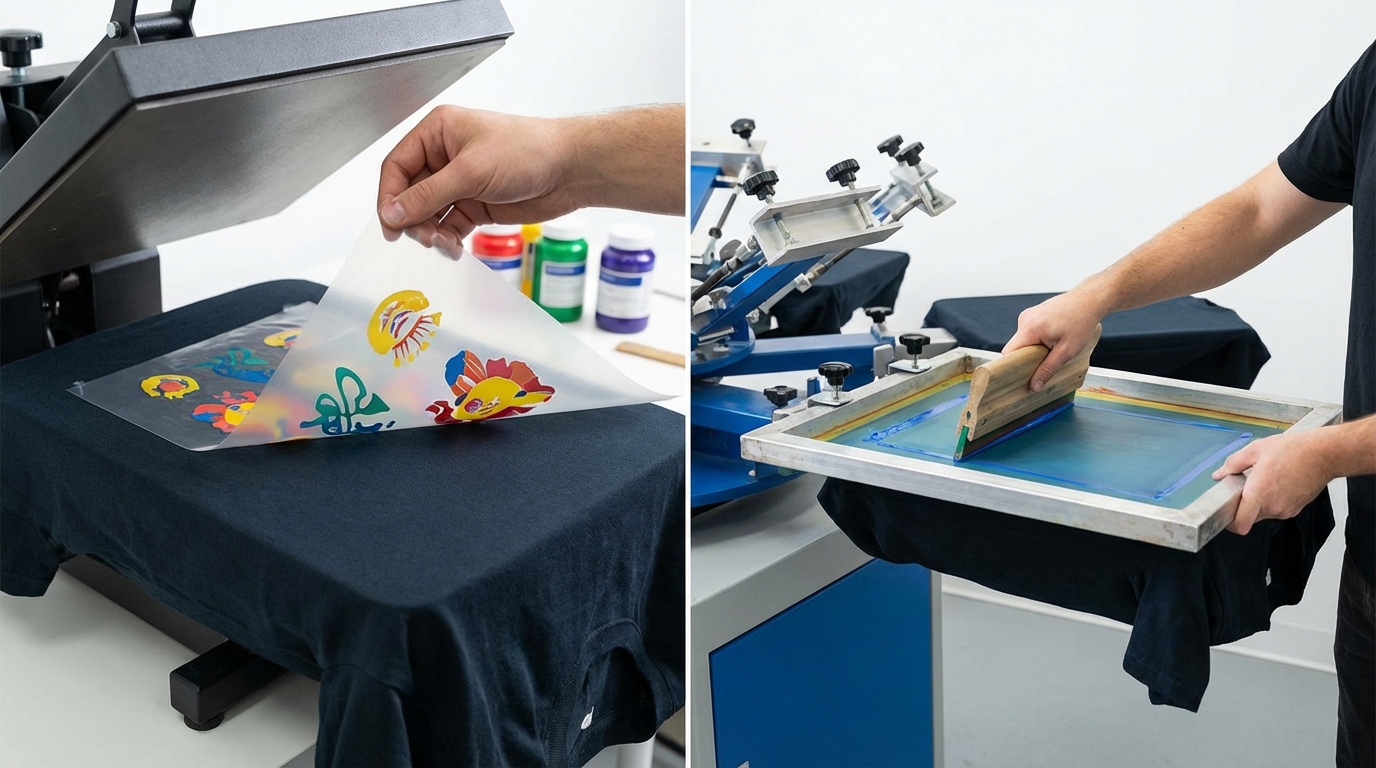
Screen printing, also known as silkscreen printing, is a traditional method that involves creating a stencil (screen) for each color in your design. Ink is then pushed through the screen onto the fabric. Screen printing is ideal for large production runs and is known for its durability and vibrant colors, especially on cotton fabrics.
When considering DTF transfer vs screen printing, print quality is a crucial factor. DTF excels at reproducing intricate designs and gradients with high accuracy. Screen printing, while capable of producing vibrant colors, can sometimes struggle with complex designs, especially those with many colors or fine details. DTF printing offers photographic print quality, something that is difficult to achieve with traditional screen printing.
For example, DTF transfers from DTF Center are known for their sharp details and ability to capture subtle color variations, making them ideal for designs with intricate artwork or photographic elements.
Durability is another key consideration. Screen-printed designs, when properly cured, are known for their excellent washability and resistance to cracking or fading. DTF transfers have improved significantly in recent years, and high-quality DTF prints can also withstand numerous washes without significant degradation. However, the durability of DTF prints can vary depending on the quality of the inks and adhesive used.
According to industry reports, high-quality DTF transfers can last for 50+ washes with proper care. [INTERNAL_LINK: Care Instructions]
The cost-effectiveness of DTF transfer vs screen printing depends largely on the order volume. Screen printing has high setup costs due to the need to create individual screens for each color. Therefore, it is more cost-effective for large production runs. DTF printing, on the other hand, has lower setup costs and is more economical for small orders or on-demand printing. With DTF, you can print one-off designs without incurring significant setup fees.
For instance, if you need only a few custom t-shirts, DTF transfer printing from a service like DTF Center will likely be the more affordable option. However, for orders of 100+ shirts, screen printing might be more economical.
Screen printing requires a more complex setup process, including creating screens, mixing inks, and setting up the printing press. This can be time-consuming and requires specialized equipment and expertise. DTF printing, in contrast, has a simpler setup process. You simply print your design onto the film and transfer it to the fabric. This makes DTF printing a more accessible option for beginners or those with limited space and resources.
Both DTF and screen printing offer a wide range of color options. However, DTF printing excels at reproducing complex color gradients and photographic images with high accuracy. Screen printing can also achieve vibrant colors, but it is more challenging to reproduce intricate color blends. DTF also allows for printing white ink on dark garments, which can be more difficult with traditional screen printing methods.
Screen printing is traditionally favored for cotton fabrics, although it can also be used on other materials with specialized inks. DTF printing is more versatile and can be used on a wider range of fabrics, including cotton, polyester, blends, and even some synthetic materials. This makes DTF a more flexible option for projects involving different types of fabrics.
Here's a summary of the advantages and disadvantages of DTF transfer printing:
Here's a summary of the advantages and disadvantages of screen printing:
Choosing between DTF transfer vs screen printing depends on your specific needs and priorities. Consider these factors:
Ultimately, the best way to determine which method is right for you is to evaluate your specific project requirements and compare the pros and cons of each option. Services like DTF Center offer both DTF transfers and can provide guidance on the best choice for your needs.
The main difference lies in the setup process and suitability for different order volumes. DTF has lower setup costs and is ideal for small orders, while screen printing has higher setup costs but is more cost-effective for large production runs.
High-quality DTF prints can be quite durable, withstanding numerous washes. However, the durability of DTF prints can vary depending on the quality of the inks and adhesive used. Screen-printed designs are generally known for their excellent washability and resistance to cracking or fading.
DTF printing is more versatile than screen printing and can be used on a wider range of fabrics, including cotton, polyester, blends, and some synthetic materials.
DTF Center provides high-quality custom DTF transfers and UV DTF stickers with fast turnaround times, including same-day shipping and local pickup options. We specialize in durable prints for apparel and promotional items, offering solutions for both small and large orders. Our commitment to quality and customer satisfaction makes us a trusted partner for all your printing needs.

Same-day DTF transfers, gang sheets and UV DTF stickers printed in Dallas, Texas and shipped nationwide. No minimums, no setup fees, over 80,000 inches printed daily.

Leave a comment