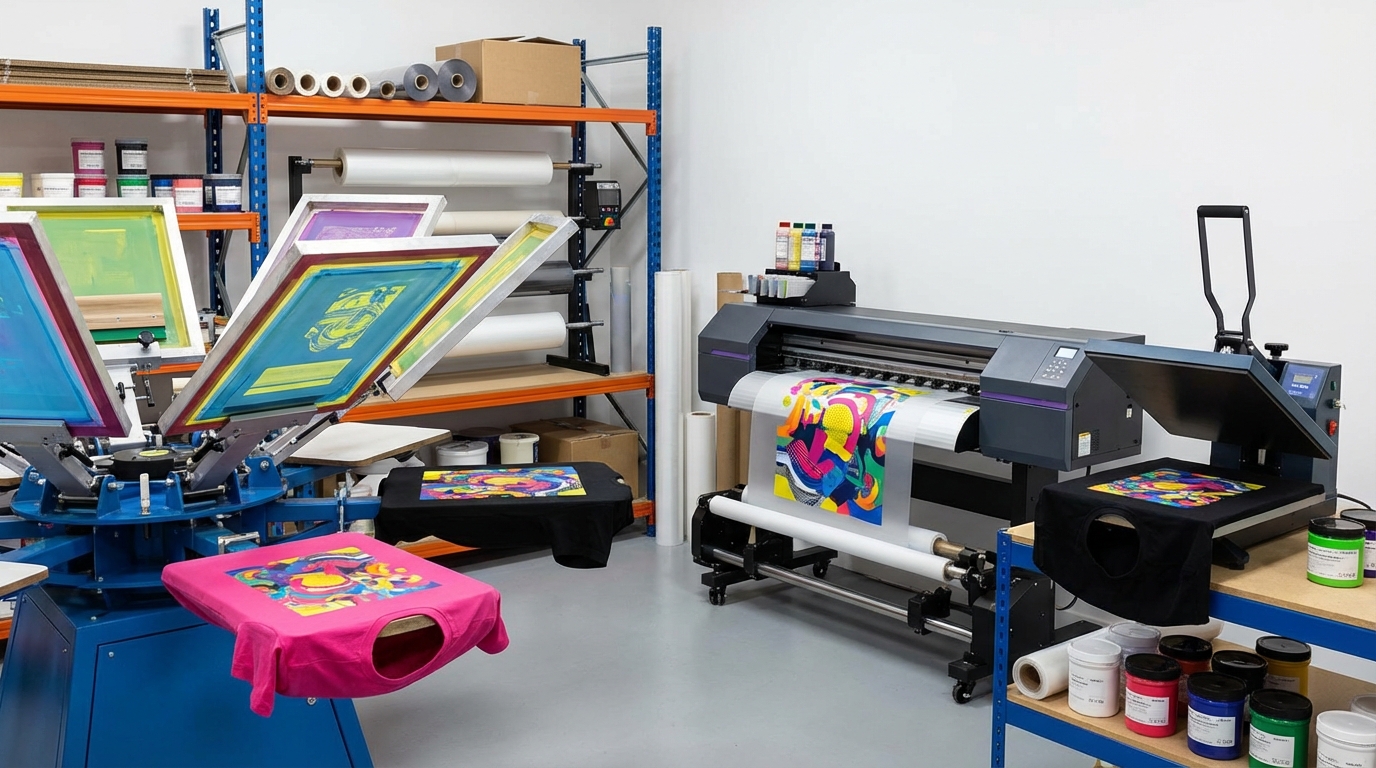
DTF vs Screen Printing: Which is Best for Your Apparel?
DTF vs Screen Printing: Which is Right for Your Apparel?
Are you looking to customize apparel but unsure whether DTF (Direct to Film) transfers or traditional screen printing is the best method? Both offer unique advantages and disadvantages depending on your specific needs, budget, and design complexity. This comprehensive guide will break down the key differences between **dtf vs screen printing**, covering everything from cost and quality to durability and ideal applications, ensuring you make an informed decision for your project.
Direct to Film (DTF) printing is a relatively new digital printing method that involves printing designs onto a special film, applying adhesive powder, and then heat-pressing the transfer onto the fabric. This process allows for full-color, detailed prints on a variety of materials, including cotton, polyester, and blends. DTF printing is known for its versatility and ability to produce vibrant, durable prints without the need for extensive setup. [INTERNAL_LINK: Products]
What is Screen Printing?
Screen printing, also known as silkscreen printing, is a traditional printing technique that involves creating a stencil (screen) for each color in the design. Ink is then pushed through the stencil onto the fabric, one color at a time. Screen printing is a popular choice for large-volume orders due to its cost-effectiveness and ability to produce durable, high-quality prints. However, it requires more setup and is less suitable for complex, multi-colored designs.
DTF vs Screen Printing: A Detailed Comparison
Let's dive into a detailed comparison of **DTF vs screen printing** across several key factors:
Cost Analysis: Upfront and Per-Unit
* **DTF Printing:** Generally lower upfront costs, as it requires less equipment than screen printing. The cost per print can be higher for small quantities but becomes more competitive for larger, more complex designs. DTF transfers from DTF Center offer competitive pricing, especially for orders with multiple colors or gradients.
* **Screen Printing:** Higher upfront costs due to the need for screens, emulsions, and other equipment. However, the cost per print is typically lower for large volume orders, making it a more economical choice for bulk production.
Print Quality and Detail
* **DTF Printing:** Excellent for reproducing intricate designs and photographic images with high levels of detail. DTF allows for full-color gradients and fine lines, which can be challenging to achieve with screen printing. The prints are sharp and vibrant, capturing even the smallest details of the original design.
* **Screen Printing:** Well-suited for bold, solid colors and simpler designs. While it can achieve good detail, it is less effective for complex gradients or photographic images. Halftones can be used to simulate gradients, but the results may not be as smooth as with DTF.
Durability and Washability
* **DTF Printing:** Offers good durability and washability when applied correctly. The prints are resistant to cracking and fading, even after multiple washes. High-quality DTF transfers, like those offered by DTF Center, use premium inks and adhesives for maximum durability.
* **Screen Printing:** Known for its exceptional durability. Screen-printed designs are highly resistant to cracking, fading, and peeling, making them ideal for garments that will be worn and washed frequently. The ink is embedded into the fabric fibers, creating a long-lasting bond.
Color Vibrancy and Accuracy
* **DTF Printing:** Capable of producing vibrant, accurate colors that closely match the original design. DTF printers use CMYK inks, which allow for a wide range of colors and gradients. Color matching is generally easier with DTF than with screen printing.
* **Screen Printing:** Can achieve excellent color vibrancy, but color matching can be more challenging. Each color requires a separate screen, and achieving precise color matches may require adjustments to the ink formulation. Pantone Matching System (PMS) colors are commonly used to ensure accurate color reproduction.
Fabric Compatibility
* **DTF Printing:** Highly versatile and can be used on a wide range of fabrics, including cotton, polyester, blends, and even some synthetic materials. This makes it a good choice for printing on different types of garments and textiles.
* **Screen Printing:** Works well on cotton, polyester, and some blends. However, it may not be suitable for all types of fabrics, particularly those with delicate or textured surfaces. Some inks are specifically formulated for certain fabrics, such as nylon or spandex.
Design Complexity and Limitations
* **DTF Printing:** Excels at printing complex, multi-colored designs with gradients and fine details. There are virtually no limitations on the number of colors that can be used in a DTF print. This makes it ideal for photographic images and intricate artwork.
* **Screen Printing:** Best suited for simpler designs with fewer colors. Each color requires a separate screen, which adds to the setup time and cost. Complex designs with many colors can be challenging and expensive to produce using screen printing.
Production Speed and Scalability
* **DTF Printing:** Can be faster for small to medium-sized orders, as it requires less setup time than screen printing. DTF transfers can be produced quickly and easily applied to garments on demand. DTF Center offers same-day shipping and local pickup options for fast turnaround times.
* **Screen Printing:** Slower for small orders due to the setup time required to create the screens. However, it is much faster for large volume orders, as multiple garments can be printed quickly once the screens are in place. Screen printing is highly scalable for mass production.
Environmental Impact
* **DTF Printing:** Generally considered to be more environmentally friendly than screen printing, as it produces less waste and uses water-based inks. DTF printing also eliminates the need for harsh chemicals used in screen cleaning.
* **Screen Printing:** Can generate more waste due to the use of screens, emulsions, and cleaning chemicals. However, efforts are being made to develop more sustainable screen printing practices, such as using eco-friendly inks and reclaiming screens.
When to Choose DTF Printing
Consider DTF printing if:
1. You need to print complex, multi-colored designs with gradients or fine details.
2. You are printing on a variety of fabrics, including cotton, polyester, and blends.
3. You need a fast turnaround time for small to medium-sized orders.
4. You want a more environmentally friendly printing option.
5. You are looking for a cost-effective solution for short runs or personalized items.
When to Choose Screen Printing
Consider screen printing if:
1. You are printing large volume orders with simple designs and solid colors.
2. You need exceptional durability and washability.
3. You are printing on cotton or polyester fabrics.
4. You are looking for the most cost-effective option for bulk production.
5. You have experience with screen printing or are working with a reputable screen printing shop.
Frequently Asked Questions (FAQs)
**Q: Is DTF printing more durable than screen printing?**
A: Screen printing generally offers slightly better durability due to the ink being directly embedded into the fabric. However, high-quality DTF transfers, like those from DTF Center, can also be very durable and long-lasting.
**Q: Can I print on dark garments with DTF?**
A: Yes, DTF printing is excellent for printing on dark garments. A white underbase is printed first to ensure that the colors are vibrant and opaque.
**Q: What is the minimum order quantity for DTF transfers at DTF Center?**
A: DTF Center offers no minimum order quantity, making it ideal for small businesses and individuals needing custom apparel.
**Q: How long do DTF prints last?**
A: With proper care, DTF prints can last for 50+ washes without significant fading or cracking. Always follow the garment care instructions to maximize the lifespan of your prints.
**Q: What are the advantages of using DTF transfers over screen printing for small businesses?**
A: DTF transfers offer lower upfront costs, greater design flexibility, and the ability to print on demand, making them a more accessible and cost-effective option for small businesses. The ease of use and quick turnaround times also contribute to their appeal.
About DTF Center
DTF Center provides high-quality, custom DTF transfers and UV DTF stickers with same-day shipping and local pickup options. Specializing in durable prints for apparel and promotional items, DTF Center is committed to delivering fast, reliable, and customer-focused service. Visit [INTERNAL_LINK: About] to learn more about our commitment to quality and customer satisfaction. Contact us today for your DTF transfer needs!
Ultimately, the best choice between **dtf vs screen printing** depends on your specific project requirements. Consider the factors discussed above to make an informed decision and achieve the best results for your apparel customization needs. For high-quality DTF transfers and exceptional service, consider DTF Center for your next project.