DTF Transfer vs Screen Printing: Which Is Right for You?
DTF Transfer vs Screen Printing: Which Is Right for You?
Are you struggling to decide between direct-to-film (DTF) transfer and screen printing for your custom apparel needs? Both methods offer unique advantages and disadvantages, making the choice a critical one for businesses and hobbyists alike. This comprehensive guide will delve into the intricacies of DTF transfer vs screen printing, providing you with the knowledge to determine the best fit for your specific requirements.
Before diving into a detailed comparison of DTF transfer vs screen printing, let's define each process:
hero
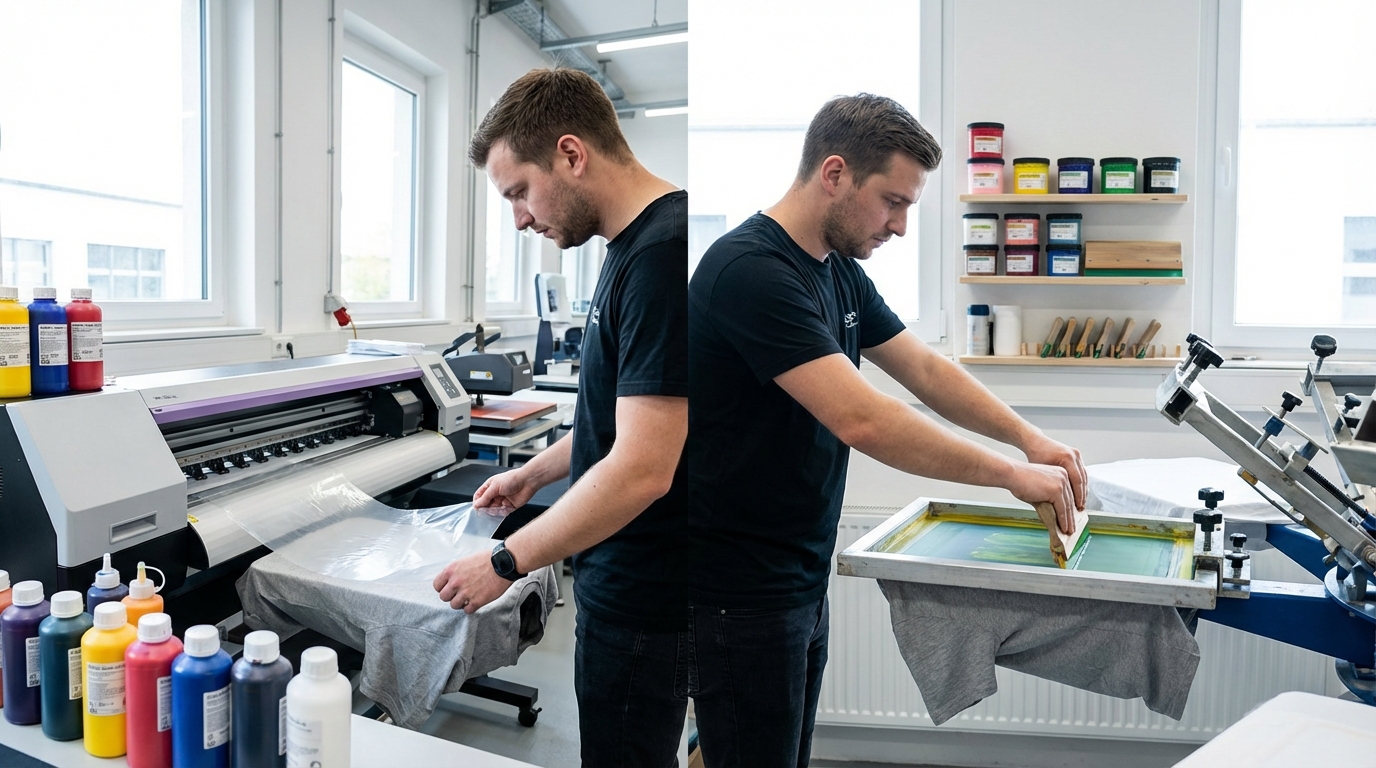
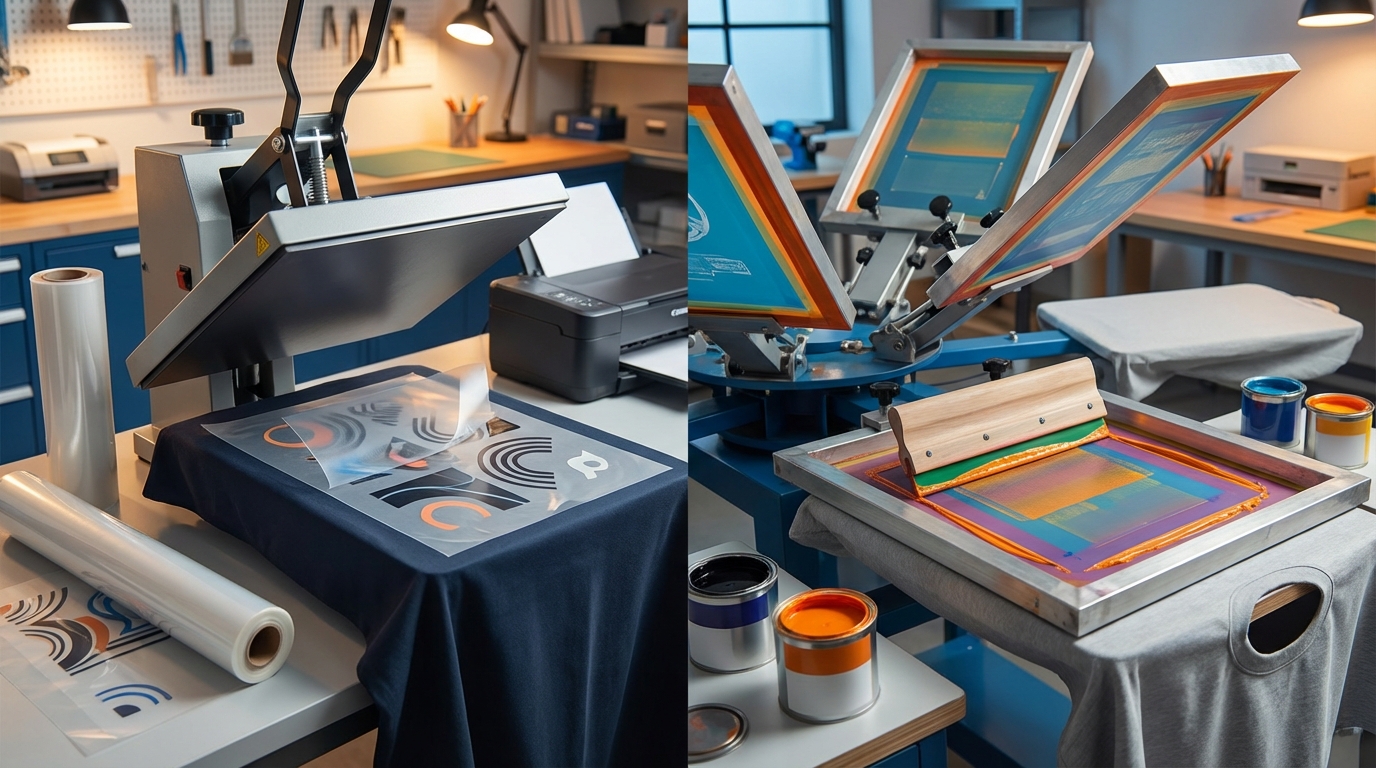
DTF Transfer: A printing method where designs are printed onto a special film using water-based inks. This film is then heat-pressed onto various fabrics. DTF excels at printing intricate, full-color designs with gradients and fine details.
Screen Printing: A traditional printing technique that involves forcing ink through a stenciled mesh screen onto the fabric. Each color requires a separate screen, making it ideal for bold, single-color or limited-color designs.
[IMAGE: Side-by-side comparison of a DTF transfer being applied and a screen printing setup, alt: DTF transfer vs screen printing]
Advantages of DTF Transfers
DTF transfers offer several compelling advantages:
in-text
Full-Color Printing: DTF excels at printing complex, full-color designs with gradients and photographic images.
No Minimum Order Quantity: DTF is cost-effective for small orders and even single-item prints.
Versatile Fabric Compatibility: DTF can be applied to a wide range of fabrics, including cotton, polyester, blends, and even leather.
Soft Hand Feel: DTF transfers often have a softer hand feel compared to some screen-printed designs.
No Pre-treatment Required (for some fabrics): Unlike DTG (direct-to-garment) printing, DTF often eliminates the need for pre-treatment on certain fabrics.
Disadvantages of DTF Transfers
While DTF offers numerous benefits, it also has some drawbacks:
Durability Concerns: While improving, DTF transfers may not be as durable as high-quality screen prints, especially with frequent washing.
Potential for Fading: Colors may fade over time with repeated washing, particularly if low-quality inks are used.
Learning Curve: Achieving optimal results with DTF requires some practice and understanding of the printing process.
Equipment Cost: While the entry cost is lower than a full screen printing setup, a DTF printer still represents a significant investment.
Advantages of Screen Printing
Screen printing remains a popular choice for several reasons:
Exceptional Durability: Screen-printed designs are known for their exceptional durability and resistance to cracking and fading.
Vibrant Colors: Screen printing can produce incredibly vibrant and long-lasting colors, especially with plastisol inks.
Cost-Effective for Large Orders: Screen printing becomes highly cost-effective for large production runs due to the economies of scale.
Variety of Inks: Screen printing offers a wide range of ink options, including specialty inks like glitter, glow-in-the-dark, and puff inks.
Disadvantages of Screen Printing
Screen printing also has its limitations:
High Setup Costs: The cost of creating screens and setting up the equipment can be significant, especially for multi-color designs.
Not Cost-Effective for Small Orders: Screen printing is not economical for small orders or single-item prints due to the setup costs.
Limited Color Palette: Printing complex, full-color designs with gradients can be challenging and expensive with screen printing.
Requires More Space: Screen printing equipment typically requires more space than DTF printing equipment.
Steep Learning Curve: Mastering screen printing techniques requires significant time, practice, and skill.
Durability and Washability: DTF Transfer vs Screen Printing
Durability is a key consideration when choosing between DTF transfer vs screen printing. Generally, high-quality screen prints are more durable than DTF transfers. However, advancements in DTF technology and ink formulations are constantly improving the durability of DTF prints.
Here's a breakdown:
Screen Printing: When done correctly with quality inks, screen prints can withstand dozens, even hundreds, of washes without significant fading or cracking.
DTF Transfer: The durability of DTF transfers depends heavily on the quality of the inks, the transfer film, and the application process. Lower-quality DTF prints may start to fade or crack after a few washes, while higher-quality prints can last much longer.
Pro Tip: Always follow the care instructions provided by the printer to maximize the lifespan of your printed garments.
Cost Comparison: DTF Transfer vs Screen Printing
The cost comparison between DTF transfer vs screen printing depends largely on the order quantity:
Small Orders (1-20 items): DTF transfer is generally more cost-effective for small orders due to the lower setup costs.
Medium Orders (20-100 items): The cost difference may be minimal, depending on the complexity of the design and the number of colors.
Large Orders (100+ items): Screen printing becomes significantly more cost-effective for large production runs due to the economies of scale.
Consider all costs, including equipment, supplies, labor, and waste, when calculating the total cost per print.
Setup and Equipment Requirements
The equipment required for each method differs significantly:
DTF Transfer:
DTF Printer
DTF Inks
DTF Film
DTF Powder
Heat Press
RIP Software
Screen Printing:
Screens
Inks
Squeegees
Emulsion
Exposure Unit
Washout Booth
Drying Rack
Printing Press (manual or automatic)
Screen printing typically requires more space and a larger initial investment in equipment.
Complexity and Ease of Use
While both methods require skill and practice, DTF is generally considered easier to learn than screen printing.
DTF Transfer: The process is relatively straightforward: print the design onto the film, apply powder, heat press, and peel.
Screen Printing: The process is more complex, involving creating stencils, mixing inks, aligning screens, and printing each color separately.
However, achieving optimal results with DTF still requires understanding color management, printer settings, and heat press parameters. [INTERNAL_LINK: heat press settings]
Ideal Applications for Each Method
Consider the following applications when choosing between DTF transfer vs screen printing:
DTF Transfer:
Small orders
Full-color designs
Photographic images
Personalized items
Intricate details
Printing on various fabrics
Screen Printing:
Large orders
Bold, single-color designs
Durable prints
Specialty inks
Designs with limited colors
Environmental Impact
Both printing methods have environmental considerations:
DTF Transfer: Uses water-based inks, which are generally considered more environmentally friendly than plastisol inks used in some screen printing applications. However, the transfer film and powder generate waste.
Screen Printing: Plastisol inks can contain harmful chemicals and require solvents for cleanup. However, water-based screen printing inks are available and more eco-friendly. The screen reclaiming process also generates waste.
Choose eco-friendly inks and proper waste disposal methods to minimize the environmental impact of either method.
Choosing the Right Method for You
Ultimately, the best method for you depends on your specific needs and priorities. Consider the following questions:
What is your budget?
What is the typical order size you will be fulfilling?
What type of designs will you be printing?
What fabrics will you be printing on?
How important is durability?
How important is ease of use?
By carefully evaluating these factors, you can make an informed decision about whether DTF transfer vs screen printing is the right choice for you.
Frequently Asked Questions
What is the main difference between DTF and screen printing?
The main difference lies in the process. DTF involves printing onto a film and then transferring it to the fabric using heat, while screen printing involves forcing ink through a stencil onto the fabric directly.
Is DTF better than screen printing?
Neither method is inherently "better." DTF excels at full-color, small-quantity orders, while screen printing is more cost-effective for large orders and offers greater durability.
Which is more durable, DTF or screen printing?
Generally, screen printing is more durable than DTF, especially when using high-quality plastisol inks. However, advancements in DTF technology are improving the durability of DTF prints.
Conclusion
In conclusion, the choice between DTF transfer vs screen printing hinges on your specific requirements. DTF offers versatility, ease of use, and cost-effectiveness for small orders and full-color designs. Screen printing provides unmatched durability and cost-efficiency for large production runs and bold, limited-color designs. By carefully considering the factors outlined in this guide, you can make an informed decision that aligns with your business goals and printing needs. Ready to explore your printing options? Contact us today for a free consultation! [INTERNAL_LINK: contact us page]