Design Your Dream T-Shirt: Custom Printing Made Easy
Design Your Dream T-Shirt: Custom Printing Made Easy
Want to express your unique style or promote your brand with custom apparel? Custom t-shirt printing offers a powerful way to do just that. Whether you're looking for a single personalized tee or a bulk order for your business, understanding the process and options available is key. This guide will walk you through everything you need to know about custom t-shirt printing, from design to delivery.
Custom t-shirt printing is the process of transferring a design onto a blank t-shirt. This allows individuals, businesses, and organizations to create personalized apparel for various purposes, including branding, events, personal expression, and more. The designs can range from simple text and logos to complex graphics and artwork. There are several methods used in custom t-shirt printing, each with its own advantages and disadvantages, which we'll explore later.
hero
Different Types of Custom T-Shirt Printing
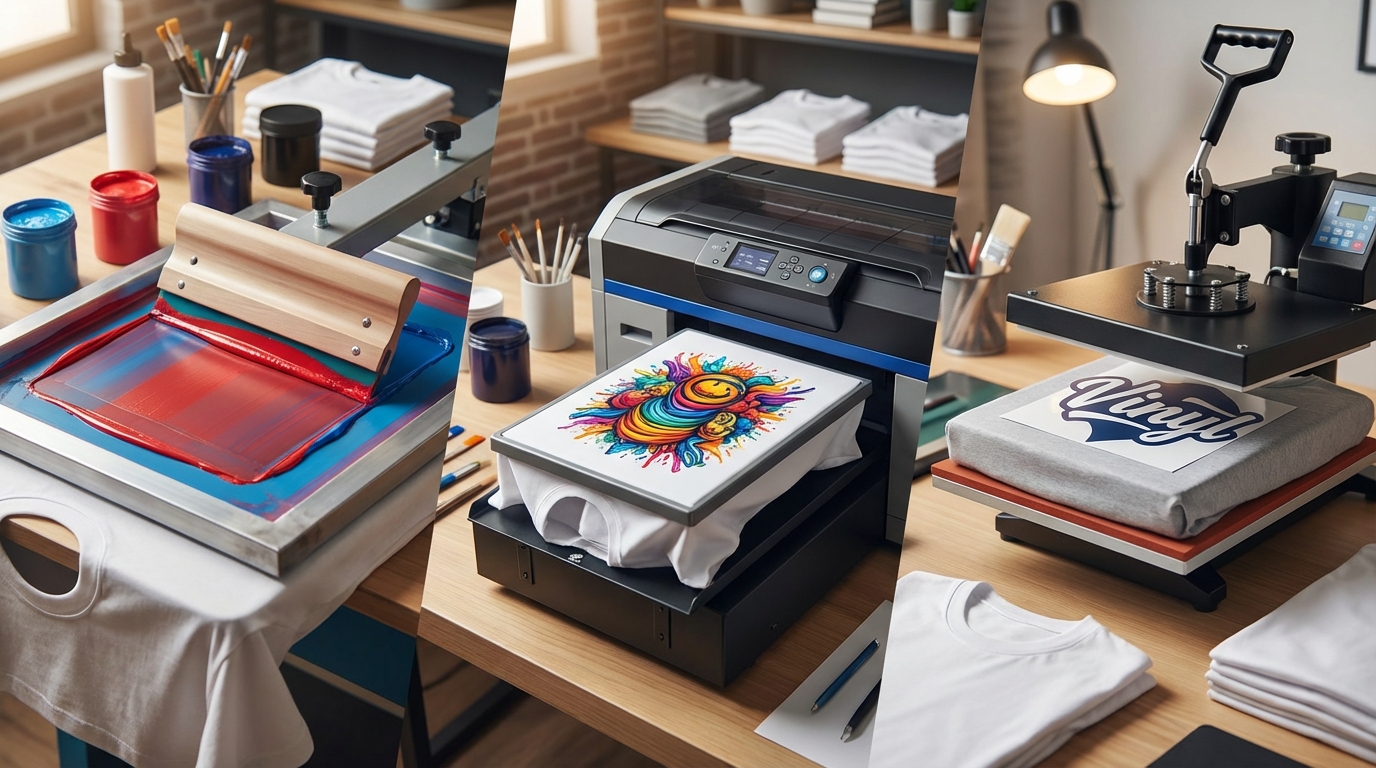
Screen Printing: A popular choice for large orders, screen printing involves creating a stencil (screen) for each color in the design and then pressing ink through the screen onto the fabric. It is known for its durability and vibrant colors.
Direct-to-Garment (DTG) Printing: DTG printing is similar to inkjet printing on paper, but it's used on fabric. This method is ideal for small orders and designs with many colors or gradients.
Heat Transfer Vinyl (HTV): HTV involves cutting designs from vinyl material and then heat-pressing them onto the t-shirt. It's a good option for simple designs with few colors.
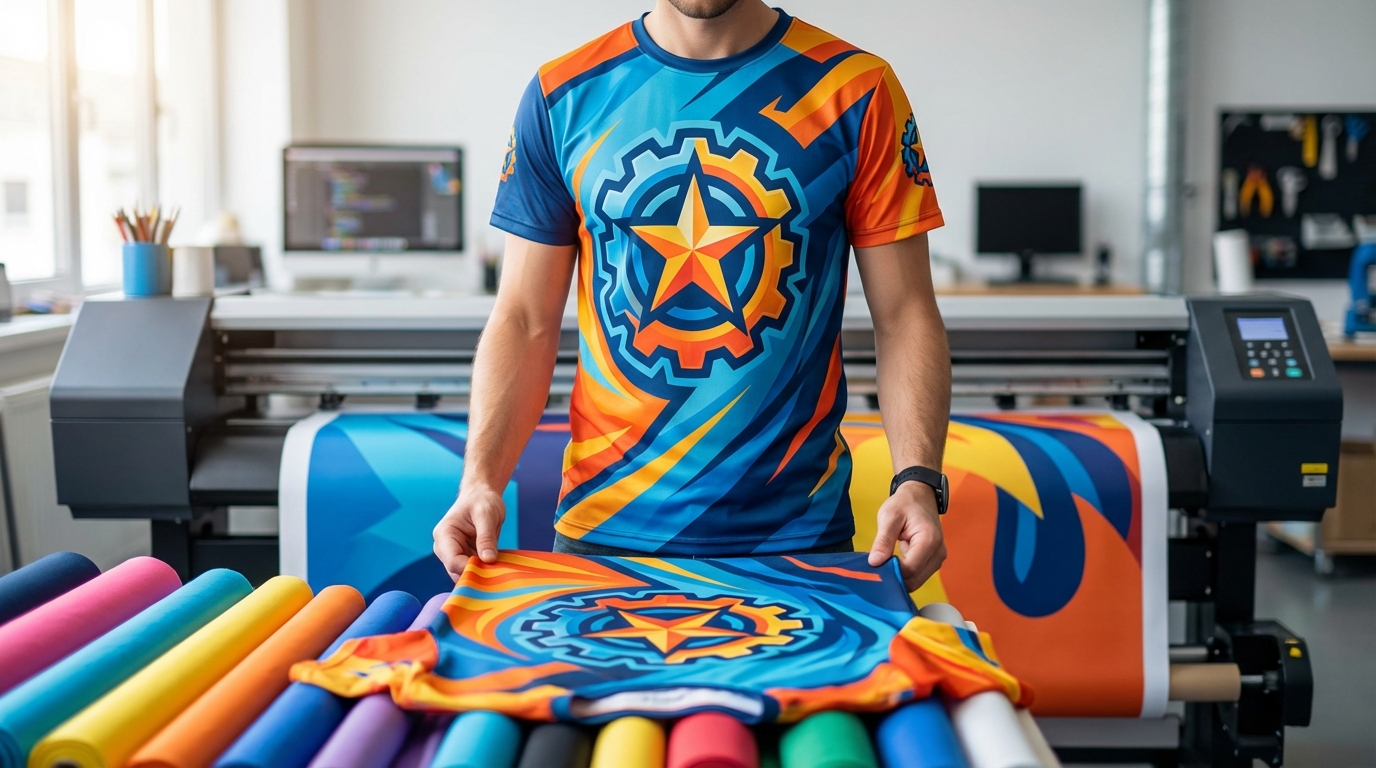
Sublimation Printing: Sublimation printing is used on polyester fabrics. The design is printed onto special paper and then heat-pressed onto the fabric, causing the ink to turn into a gas and bond with the fibers.
[IMAGE: A collage showing different custom t-shirt printing methods (screen printing, DTG, HTV, sublimation), each with a sample t-shirt showcasing the result. Alt text: Different custom t-shirt printing methods]
The Benefits of Custom T-Shirts
Custom t-shirts offer a wide range of benefits for individuals and businesses alike:
The Design Process: From Concept to CreationDifferent Types of Custom T-Shirt Printing
Brand Promotion: Custom t-shirts with your logo and branding can serve as walking billboards, increasing brand visibility and recognition. According to a study by the Advertising Specialty Institute, promotional apparel generates over 5,700 impressions throughout its lifetime.
Team Building: Matching t-shirts can foster a sense of unity and belonging within a team or organization.
Personal Expression: Custom t-shirts allow individuals to express their creativity, interests, and beliefs.
Event Memorabilia: Custom t-shirts can serve as memorable keepsakes for events such as concerts, festivals, and reunions.
Fundraising: Selling custom t-shirts can be a successful fundraising strategy for charities, schools, and other organizations.
Choosing the Right Printing Method
Selecting the appropriate printing method is crucial for achieving the desired results. Here's a comparison of the different methods:
Printing Method
Best For
Pros
Cons
Screen Printing
Large orders, simple designs
Durable, vibrant colors, cost-effective for bulk orders
Not ideal for complex designs, high setup costs
DTG Printing
Small orders, complex designs
Good for detailed designs, no minimum order quantity
More expensive for large orders, less durable than screen printing
HTV
Simple designs, small orders
Affordable for small orders, good for personalization
Not suitable for complex designs, can crack or peel over time
Sublimation
Polyester fabrics, all-over prints
Vibrant, permanent prints, no cracking or peeling
Only works on polyester, requires special equipment
The Design Process: From Concept to Creation
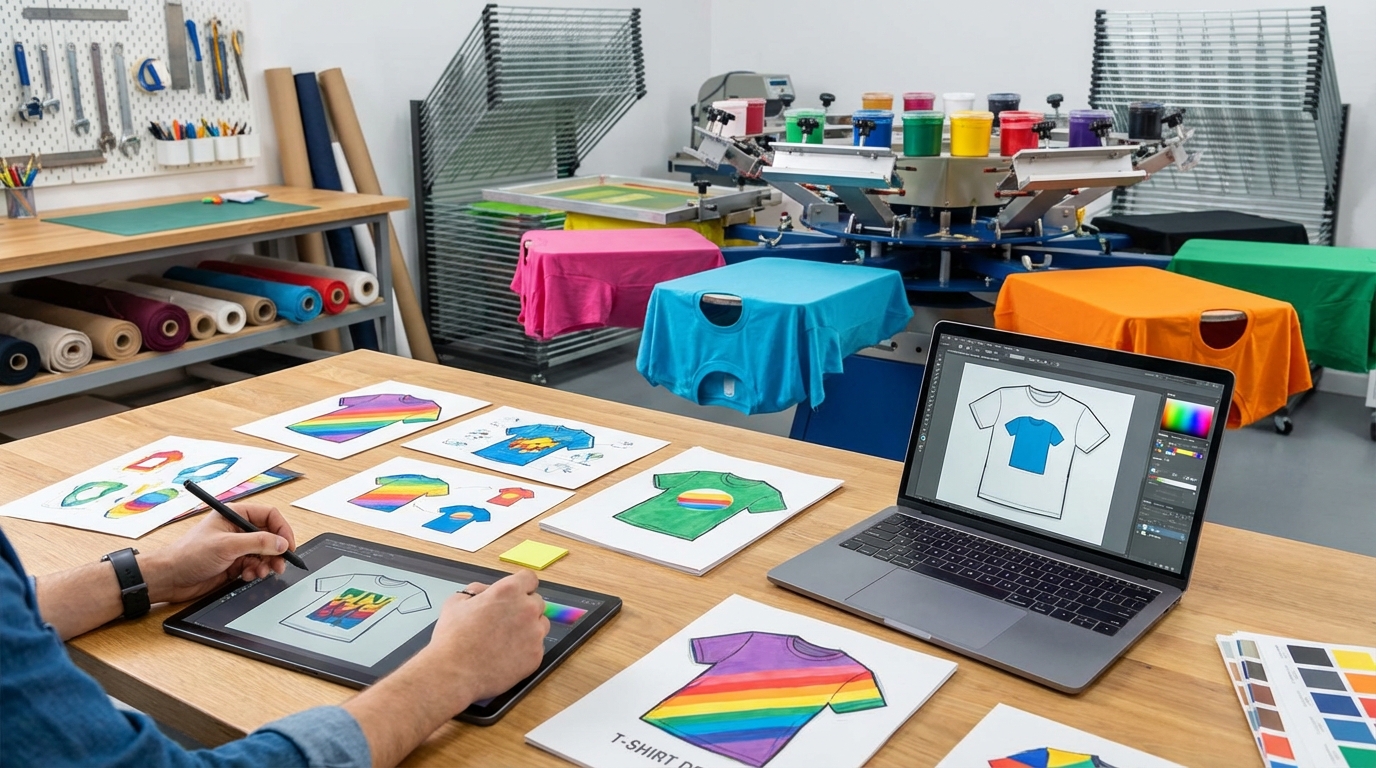
The design process is a critical step in custom t-shirt printing. You can either create your own design or work with a professional designer. Here's a breakdown of the key steps:
Brainstorming and Conceptualization: Define your vision and gather inspiration. Consider the purpose of the t-shirt, the target audience, and the message you want to convey.
Design Creation: Use graphic design software (e.g., Adobe Photoshop, Illustrator) to create your design. If you're not a designer, you can hire a freelancer or use online design tools.
File Preparation: Ensure your design is in the correct format (e.g., PNG, JPEG, vector) and resolution for printing.
Proofing: Review a digital proof of your design before printing to ensure everything looks as expected.
[IMAGE: A split image showing a person sketching a t-shirt design on paper and another person using graphic design software to create a digital t-shirt design. Alt text: The design process for custom t-shirts: sketching and digital design]
Selecting the Perfect T-Shirt: Fabric, Fit, and Style
The type of t-shirt you choose will impact the overall look and feel of your custom apparel. Consider the following factors:
Fabric: Cotton is a popular choice for its comfort and affordability. Polyester is durable and moisture-wicking. Blends offer a combination of both.
Fit: Choose from classic fit, slim fit, or relaxed fit depending on your preference.
Style: Consider the neckline (crew neck, v-neck), sleeve length (short sleeve, long sleeve), and other design features.
Weight: T-shirt weight is measured in ounces per square yard. Heavier shirts (6oz+) are more durable and structured, while lighter shirts (3-5oz) are more breathable and comfortable.
Understanding Pricing and Turnaround Time
The cost of custom t-shirt printing depends on several factors, including the printing method, the number of colors in the design, the quantity of t-shirts, and the type of t-shirt. Turnaround time can vary depending on the printer's workload and the complexity of the project. Expect faster turnaround times for simpler projects and smaller orders.
To get an accurate quote, provide the printer with the following information:
Design file
Quantity of t-shirts
T-shirt type (fabric, fit, style)
Printing method
Desired turnaround time
Tips for a Successful Printing Project
Choose a Reputable Printer: Research and select a printer with a proven track record and positive reviews. [INTERNAL_LINK: choosing a printing service]
Provide High-Quality Artwork: Ensure your design is in the correct format and resolution for printing.
Communicate Clearly: Clearly communicate your expectations and requirements to the printer.
Order Samples: If possible, order a sample t-shirt before placing a large order to ensure you're satisfied with the quality.
Consider Bulk Discounts: Many printers offer discounts for larger orders.
Common Mistakes to Avoid
Using Low-Resolution Artwork: This can result in blurry or pixelated prints.
Choosing the Wrong Printing Method: Select the printing method that is best suited for your design and budget.
Not Proofreading the Design: Double-check the design for any errors before printing.
Underestimating Turnaround Time: Allow ample time for printing and shipping, especially for large orders.
Ignoring Wash Instructions: Follow the recommended wash instructions to prolong the life of your custom t-shirts.
Frequently Asked Questions
What file format is best for custom t-shirt printing?
Vector files (e.g., AI, EPS, SVG) are generally preferred because they can be scaled without losing quality. High-resolution raster files (e.g., PNG, JPEG) can also be used, but ensure they are at least 300 DPI.
How do I care for my custom printed t-shirt?
Turn the t-shirt inside out before washing. Wash in cold water on a gentle cycle. Avoid using bleach or fabric softener. Tumble dry on low heat or hang to dry. Do not iron directly on the printed design.
What is the minimum order quantity for custom t-shirt printing?
The minimum order quantity varies depending on the printing method and the printer. DTG printing often has no minimum order quantity, while screen printing typically requires a minimum order of 12 or more t-shirts.
Conclusion
Custom t-shirt printing is a versatile and effective way to express your creativity, promote your brand, or create memorable keepsakes. By understanding the different printing methods, design considerations, and t-shirt options, you can create high-quality custom apparel that meets your specific needs. Remember to choose a reputable printer, provide high-quality artwork, and communicate clearly throughout the process. Start designing your dream t-shirt today and bring your vision to life!