DTF Printing 101: A Beginner's Guide to Getting Started
Are you intrigued by the vibrant, full-color designs achievable with DTF printing, but feel overwhelmed by the technical jargon and equipment options? You're not alone! This comprehensive guide is designed to demystify DTF printing for beginners, providing a clear roadmap to understanding the process and launching your own DTF printing journey. We'll cover everything from essential equipment and materials to design considerations and troubleshooting tips.
Table of Contents
- What is DTF Printing?
- DTF Printing vs. Other Printing Methods
- Essential Equipment for DTF Printing
- The DTF Printing Process: A Step-by-Step Guide
- Choosing the Right DTF Supplies
- Design Considerations for DTF Printing
- Troubleshooting Common DTF Printing Problems
- DTF Printing Business Opportunities
- Frequently Asked Questions
- Conclusion
What is DTF Printing?
Direct-to-film (DTF) printing is a garment decoration method that involves printing designs onto a special film, applying a powdered adhesive, and then heat-pressing the design onto fabric. Unlike traditional methods like screen printing, DTF printing allows for full-color, highly detailed designs on a wide range of fabrics, including cotton, polyester, and blends. It's also known for its durability and soft hand feel.
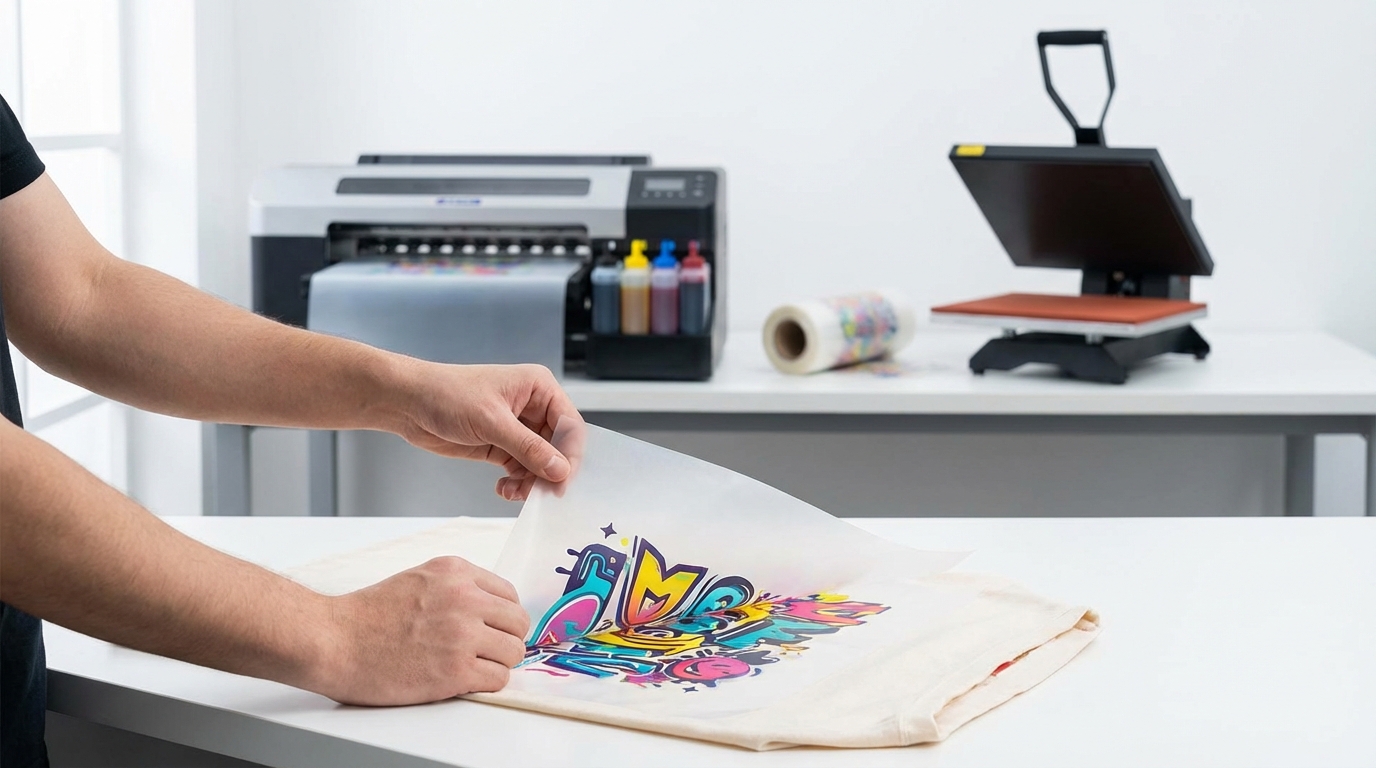
At its core, DTF printing is a digital printing technique using specialized water-based pigment inks. The process is relatively simple: a design is printed on a PET film (Polyethylene Terephthalate). Then, a hot-melt adhesive powder is applied to the wet ink. After curing the adhesive, the film is heat pressed onto the target fabric. The heat melts the adhesive, bonding the ink to the fabric. Once cooled, the PET film is peeled away, leaving the design adhered to the garment.
[IMAGE: A close-up shot of a DTF print on a t-shirt, showcasing vibrant colors and intricate details. Alt text: DTF print on a t-shirt]DTF Printing vs. Other Printing Methods
To understand the advantages of DTF printing for beginners, it's helpful to compare it to other common garment decoration methods:
- Screen Printing: Screen printing is a traditional method that uses stencils to apply ink to fabric. It's cost-effective for large quantities but requires significant setup time and is less suitable for complex, multi-colored designs.
- Direct-to-Garment (DTG) Printing: DTG printing involves printing directly onto fabric using specialized inkjet printers. It's ideal for small quantities and highly detailed designs, but it's typically limited to cotton fabrics and requires pre-treatment.
- Sublimation: Sublimation printing uses heat to transfer dye onto polyester fabrics. It produces vibrant, long-lasting prints, but it's only suitable for polyester or polyester-rich blends.
DTF printing offers a compelling alternative by combining the versatility of DTG with the durability and fabric compatibility of screen printing. It also boasts a lower barrier to entry than other printing methods.
Essential Equipment for DTF Printing
Starting with DTF printing requires specific equipment. Here's a breakdown of the essential components:
- DTF Printer: A modified inkjet printer designed to handle DTF inks and film. These printers often have specialized ink delivery systems and print heads.
- DTF Inks: Water-based pigment inks formulated for DTF printing. These inks are designed to adhere to the film and transfer effectively to fabric.
- DTF Film: PET film specifically coated for DTF printing. This film acts as a carrier for the ink and adhesive powder.
- DTF Powder: A hot-melt adhesive powder that bonds the ink to the fabric. The powder is applied to the wet ink on the film.
- Powder Shaker/Applicator: A device used to evenly apply the DTF powder to the film. Automatic shakers are available, but manual methods are also possible.
- Heat Press: A heat press is used to transfer the design from the film to the fabric. A high-quality heat press with precise temperature and pressure control is essential.
- RIP Software: Raster Image Processor (RIP) software is used to manage the printing process, color profiles, and ink density.
- Curing Oven (optional): A curing oven is used to cure the adhesive powder on the film before heat pressing. This helps to ensure a consistent and durable bond.
Investing in quality equipment is crucial for achieving professional results. Research different brands and models to find the best options for your budget and needs.
[IMAGE: A DTF printer printing a design onto DTF film. Alt text: DTF printer in operation]The DTF Printing Process: A Step-by-Step Guide
The DTF printing process involves several key steps:
- Design Preparation: Create or import your design into your chosen design software. Ensure the design is properly sized and formatted for printing.
- Printing on Film: Load the DTF film into the printer and print the design using DTF inks. The design is typically printed in reverse (mirrored).
- Powder Application: Immediately after printing, apply the DTF powder to the wet ink on the film. Ensure the powder is evenly distributed across the design.
- Powder Curing: Remove excess powder and cure the adhesive. This can be done using a heat press (hovering without contact) or a dedicated curing oven.
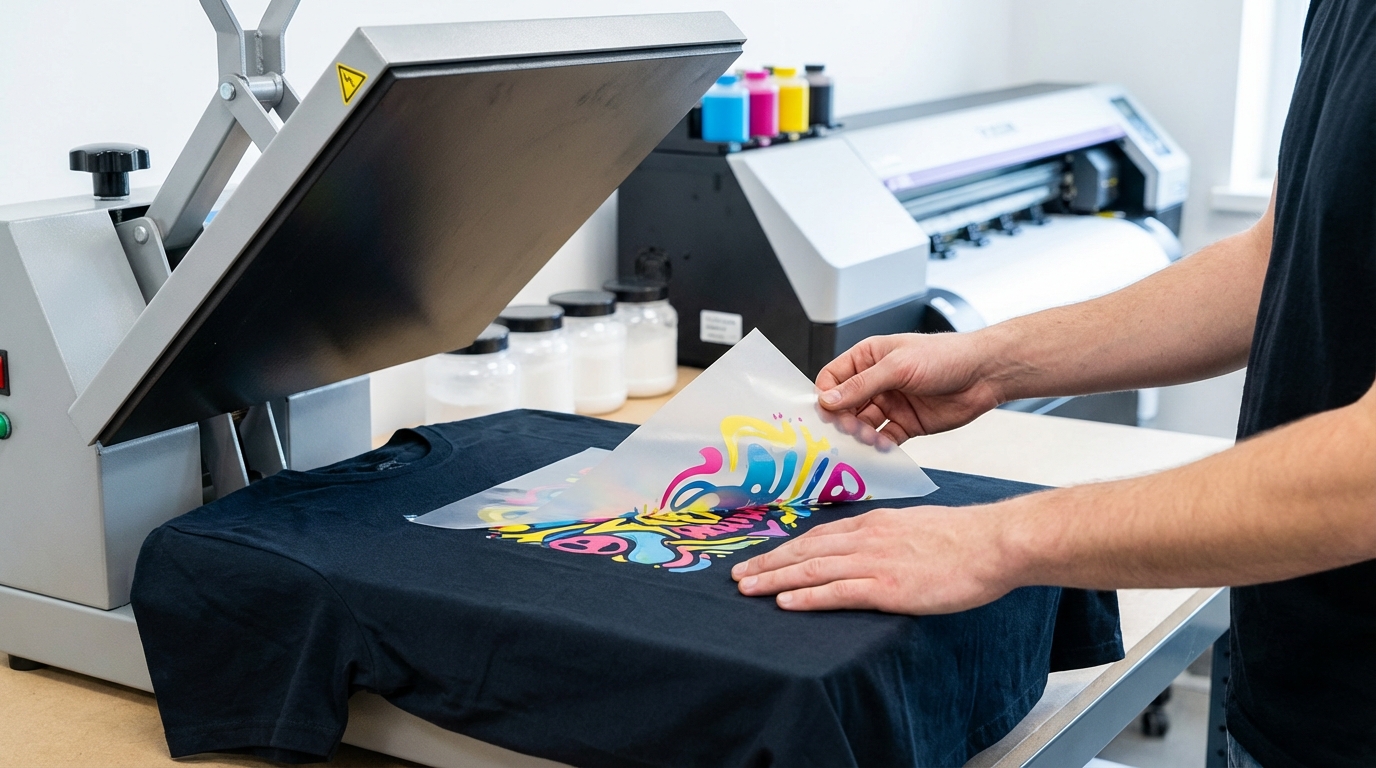
- Heat Pressing: Place the fabric onto the heat press and position the film with the design facing down onto the fabric. Press for the recommended time, temperature, and pressure.
- Cool Peel: Allow the film to cool completely before peeling it away from the fabric.
Each step requires careful attention to detail to ensure a successful transfer. Refer to your equipment and supply manufacturers' instructions for specific recommendations.
Choosing the Right DTF Supplies
The quality of your DTF supplies directly impacts the final print quality and durability. Consider these factors when selecting your supplies:
- Ink Quality: Choose reputable brands of DTF inks that offer vibrant colors, excellent wash resistance, and consistent performance.
- Film Thickness and Coating: Select a DTF film that is compatible with your printer and provides good ink adhesion and transfer.
- Powder Fineness and Melting Point: Choose a DTF powder with a fine particle size for smooth application and a melting point that is appropriate for your heat press settings.
Experiment with different brands and types of supplies to find the best combination for your specific needs and equipment. Poor quality supplies can lead to issues like fading, cracking, or poor adhesion.
Design Considerations for DTF Printing
While DTF printing is versatile, there are some design considerations to keep in mind:
- Image Resolution: Use high-resolution images to ensure sharp and detailed prints. A minimum resolution of 300 DPI (dots per inch) is recommended.
- Color Management: Use a color management system to ensure accurate color reproduction. Calibrate your monitor and printer to match your desired color output.
- Transparency and Gradients: DTF printing can handle gradients and transparency, but it's important to test these effects to ensure they print as expected.
- White Ink Underbase: For printing on dark fabrics, a white ink underbase is typically required to make the colors pop. Your RIP software should be able to generate this automatically.
Pay close attention to these details to avoid unexpected results and ensure your designs look their best.
Troubleshooting Common DTF Printing Problems
As with any printing process, DTF printing can sometimes present challenges. Here are some common problems and their solutions:
- Ink Clogging: Regularly clean your printer heads to prevent ink clogging. Use a cleaning solution specifically designed for DTF inks.
- Poor Adhesion: Ensure the heat press temperature, pressure, and time are correct. Also, check the quality of your DTF powder and film.
- Fading or Cracking: Use high-quality DTF inks and follow the recommended washing instructions for your prints.
- Uneven Powder Application: Use a powder shaker or applicator to ensure even powder distribution.
Consult your equipment and supply manufacturers' troubleshooting guides for more specific solutions.
DTF Printing Business Opportunities
DTF printing opens up a wide range of business opportunities, including:
- Custom T-Shirt Printing: Offer personalized t-shirts for individuals, groups, and events.
- Promotional Products: Print logos and designs on a variety of promotional items, such as bags, hats, and apparel.
- Small-Batch Apparel Production: Create and sell your own line of custom apparel with unique designs.
- Print-on-Demand Services: Partner with online retailers to offer print-on-demand services for their customers.
The low setup costs and versatility of DTF printing make it an attractive option for entrepreneurs looking to start a garment decoration business. [INTERNAL_LINK: garment decoration business]
Frequently Asked Questions
What is the lifespan of a DTF print?
DTF prints are known for their durability. When properly applied and cared for, they can last for 50+ washes without significant fading or cracking.
Can I print on any fabric with DTF?
Yes, DTF printing is compatible with a wide range of fabrics, including cotton, polyester, blends, and even some synthetic materials.
How do I wash DTF-printed garments?
Wash DTF-printed garments inside out in cold water. Avoid using bleach or harsh detergents. Tumble dry on low heat or hang to dry.
What is the best RIP software for DTF printing?
Popular RIP software options for DTF printing include CADlink Digital Factory, AcroRIP, and PrintFactory. The best choice depends on your printer model and specific needs.
What are LSI keywords?
Latent Semantic Indexing (LSI) keywords are words and phrases that are semantically related to your primary keyword. They help search engines understand the context and meaning of your content. Examples for DTF printing include: heat transfer, garment decoration, custom apparel, PET film, adhesive powder.
Conclusion
DTF printing for beginners can seem daunting at first, but with the right knowledge and equipment, it's a highly rewarding and versatile garment decoration method. By understanding the basics of the process, choosing the right supplies, and following best practices, you can create stunning, durable prints and unlock a world of creative and business opportunities. Ready to take the next step? Research different DTF printer options and start experimenting with your own designs. Good luck!
Ready to explore more advanced techniques? Check out our guide on [INTERNAL_LINK: advanced dtf printing techniques].