DTF vs Sublimation: 7 Key Differences [2024 Guide]
DTF vs Sublimation: Choosing the Best Printing Method
Are you trying to decide between DTF (Direct to Film) and sublimation printing for your next project? Both methods offer unique advantages, but understanding their differences is crucial for achieving the best results. This comprehensive guide will break down everything you need to know about **dtf vs sublimation printing**, helping you choose the right technique for your specific needs.
Direct to Film (DTF) printing is a relatively new technology that involves printing designs onto a special film, applying a powdered adhesive, and then heat-pressing the design onto various fabrics. DTF printing is known for its versatility and ability to print on a wide range of materials, including cotton, polyester, and blends. The process is relatively straightforward:
The design is printed onto a DTF film using specialized inks.
A powdered adhesive is applied to the printed film.
The adhesive is cured using heat.
The film is then heat-pressed onto the desired fabric.
DTF printing is particularly effective for intricate designs and vibrant colors, making it a popular choice for custom apparel and promotional items. DTF transfers from DTF Center are known for their durability and high quality.
What is Sublimation Printing?
Sublimation printing is a process where special inks are infused directly into the fabric at a molecular level. This is done using heat and pressure, which turns the solid ink into a gas, allowing it to bond permanently with the polyester fibers. Sublimation is best suited for light-colored polyester fabrics or items with a special polymer coating. The result is a vibrant, durable print that won't crack, peel, or fade.
The sublimation process involves:
Printing the design onto special sublimation paper using sublimation inks.
Placing the printed paper onto the fabric or item to be printed.
Applying heat and pressure using a heat press.
The ink sublimates into the fabric, creating a permanent bond.
Sublimation printing is ideal for all-over prints, photographic images, and designs that require a soft, breathable feel. It's commonly used for sportswear, promotional products, and home decor items.
7 Key Differences Between DTF and Sublimation
While both DTF and sublimation are popular printing methods, they have distinct characteristics. Here are seven key differences to consider when choosing between **DTF vs sublimation printing**:
Fabric Compatibility: DTF works on a wider range of fabrics, including cotton, polyester, blends, and even dark fabrics. Sublimation is primarily limited to light-colored polyester or polymer-coated items.
Durability: Both offer good durability, but sublimation generally lasts longer as the ink becomes part of the fabric. DTF prints can be very durable, especially when using high-quality DTF transfers from suppliers like [INTERNAL_LINK: About/Products/FAQ], but they sit on top of the fabric.
Color Vibrancy: DTF tends to produce more vibrant colors, especially on dark fabrics, as it uses white ink as a base. Sublimation colors can be less vibrant on darker materials.
Feel: Sublimation prints have a softer, more breathable feel because the ink is infused into the fabric. DTF prints have a slightly heavier feel as the ink sits on top of the fabric.
Cost: DTF printing can be more cost-effective for small to medium-sized runs, while sublimation can be more economical for large-scale production, especially when printing on polyester.
Complexity: DTF printing involves more steps, including applying adhesive powder and curing. Sublimation is a simpler process with fewer steps.
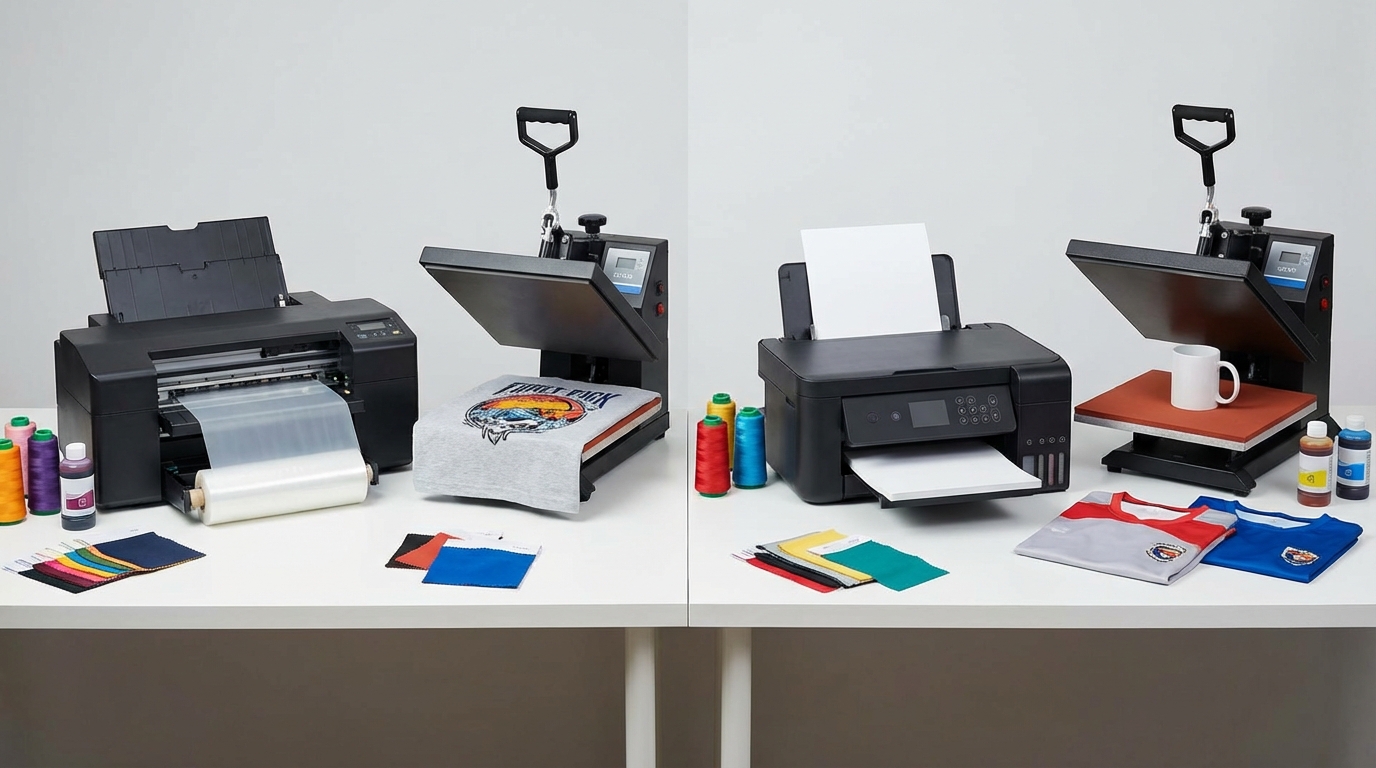
Equipment: DTF printing requires a DTF printer, heat press, and adhesive powder applicator. Sublimation requires a sublimation printer, heat press, and sublimation paper.
Sublimation Printer, Heat Press, Sublimation Paper
DTF Printing: Pros and Cons
To further clarify the **dtf vs sublimation printing** debate, let's examine the pros and cons of DTF printing.
Pros of DTF Printing:
Versatility: Prints on a wide range of fabrics, including cotton, polyester, and blends.
Vibrant Colors: Produces vibrant and detailed prints, even on dark fabrics.
Durability: Offers good washability and durability, especially with high-quality transfers.
No Pre-treatment Required: Eliminates the need for pre-treating fabrics, saving time and resources.
Suitable for Small Runs: Cost-effective for small to medium-sized orders.
Cons of DTF Printing:
Feel: The print can have a slightly heavier feel compared to sublimation.
More Complex Process: Requires more steps and equipment than sublimation.
Adhesive Powder: Requires the use of adhesive powder, which can be messy.
Newer Technology: Being a newer technology, the long-term durability and reliability are still being evaluated, although current results are promising.
Sublimation Printing: Pros and Cons
Now, let's explore the advantages and disadvantages of sublimation printing.
Pros of Sublimation Printing:
Soft Feel: Creates a soft, breathable print that becomes part of the fabric.
Excellent Durability: Offers excellent washability and fade resistance.
All-Over Prints: Ideal for all-over prints and photographic images.
Simple Process: Relatively simple and straightforward printing process.
Economical for Large Runs: Cost-effective for large-scale production.
Cons of Sublimation Printing:
Limited Fabric Compatibility: Only works on light-colored polyester or polymer-coated items.
Color Limitations: Colors can be less vibrant on darker materials.
Polyester Only: Cannot be used on natural fibers like cotton (unless using special coatings).
White Ink Limitation: Cannot print white ink, so white areas in the design will be the color of the substrate.
Which Printing Method is Better for You?
The best printing method depends on your specific needs and project requirements. Consider the following factors:
* **Fabric Type:** If you need to print on cotton or dark fabrics, DTF is the better choice. If you're working with light-colored polyester, sublimation is ideal.
* **Design Complexity:** Both methods can handle complex designs, but DTF excels at vibrant colors and fine details on various materials.
* **Print Feel:** If a soft, breathable feel is important, sublimation is preferable. If a slightly heavier feel is acceptable, DTF is a viable option.
* **Budget:** For small to medium runs, DTF may be more cost-effective. For large-scale production, sublimation can be more economical.
* **Durability Needs:** While both offer good durability, sublimation generally lasts longer as the ink is infused into the fabric. However, high-quality DTF transfers offer excellent durability as well. [INTERNAL_LINK: About/Products/FAQ]
For example, if you're printing custom t-shirts with intricate designs on cotton, DTF is likely the better option. If you're creating all-over print sportswear on polyester, sublimation is the preferred method.
Frequently Asked Questions
What is the difference between DTG and DTF printing?
DTG (Direct to Garment) printing prints directly onto the fabric, while DTF prints onto a film that is then transferred to the fabric. DTF is more versatile and can print on a wider range of fabrics than DTG.
Is DTF printing better than sublimation?
Neither is inherently "better." DTF is better for printing on cotton and dark fabrics, while sublimation is better for printing on light-colored polyester.
How long does DTF printing last?
DTF prints can last for many washes if properly cared for. High-quality DTF transfers, like those offered by DTF Center, are designed for durability and longevity. [INTERNAL_LINK: topic]
Can you sublimate on dark colors?
No, sublimation printing requires light-colored fabrics because the ink is translucent and will not show up well on dark colors.
About DTF Center
At DTF Center, we specialize in providing high-quality custom DTF transfers and UV DTF stickers with same-day shipping and local pickup options. Our durable prints are perfect for apparel and promotional items, ensuring vibrant colors and long-lasting results. Visit DTF Center today to explore our services and elevate your printing projects.
In conclusion, understanding the nuances of **dtf vs sublimation printing** is key to selecting the right method for your project. By considering fabric type, design complexity, budget, and desired print feel, you can make an informed decision that delivers optimal results. Whether you choose DTF for its versatility or sublimation for its soft feel and durability, both methods offer unique advantages for creating stunning and long-lasting prints.

![DTF vs Sublimation: 7 Key Differences [2024 Guide]](http://dtfcenter.com/cdn/shop/articles/aaf539b9-2fc2-4b2c-8ca5-a0cd9d93ca8d-featured-1768863635587_1376x768_crop_center.png?v=1768863651)